Key Takeaways
What a vacant land purchase agreement must contain, which contingencies matter on bare ground, and what the law does when either side walks away.
- A contract for the sale of land must be in writing and signed, under every state’s statute of frauds.
- Money damages are the default remedy for a broken contract, but real estate is the recognised exception.
- Six of the ten contingencies the NAR names are meaningless on a parcel with nothing built on it.
- Describe the parcel by its legal description from the deed, never by street address or parcel number.
- Earnest money belongs with a title company or attorney in escrow, never in the seller’s account.
A land purchase agreement looks like a form, and almost everything written about it treats it as one. Fill in the blanks, sign, done.
What that misses is that a contract for land is legally unlike a contract for anything else. It has to be written down to exist at all. It carries a remedy most contracts do not. And the standard contingency list everyone copies was built for houses, so more than half of it does nothing for a bare parcel.
This is for buyers and sellers handling a for-sale-by-owner land deal without an agent, which is legal in every state and puts the paperwork squarely on you. Everything below is general information rather than legal advice, and the rules differ by state, so have a real estate attorney in the state where the land sits read the draft before anyone signs.
Quick verdict: start from a state-specific form, copy the legal description from the deed, replace the residential contingency list with the land one, put the deposit in escrow with named release conditions, and write the default clause out in full. Then have an attorney read it. That sequence costs a few hundred dollars and is the difference between a contract a court will enforce and a conversation neither side can prove.
What Is a Land Purchase Agreement, and Why Must It Be in Writing?
A land purchase agreement is a binding contract in which one party agrees to sell a parcel and the other agrees to buy it on stated terms, fixing the price, the conditions and the date ownership transfers. It has to be in writing because a verbal one is generally unenforceable.
That rule has a name. The statute of frauds is, in Cornell Law School’s words, “a statute requiring certain contracts to be in writing and signed by the parties bound by the contract”, and its “purpose is to prevent fraud and other injury”. Among the categories it covers are “contracts that involve the sale or transfer of land”.
Every state has a version. So a handshake on a parcel is not a weak agreement that a court might enforce reluctantly. It is usually no agreement at all, which cuts both ways: the buyer cannot compel the sale, and the seller cannot keep a deposit under a contract that does not legally exist.
Because there is no structure to inspect, the terms in a land agreement lean heavily on access, title, zoning and buildability rather than condition. That is also where a residential template starts to fail you, and it is the reason this document deserves more attention than the house version, not less. Our guide on how to buy vacant land covers the wider process this contract sits inside.
What Must a Land Purchase Agreement Include?
Eight elements, and a gap in any of them is where disputes start. Identify the parties, describe the land legally, state the price and how it is paid, name the deposit and who holds it, list the contingencies, set the closing date and cost split, specify the deed and title standard, and write out what happens on default.
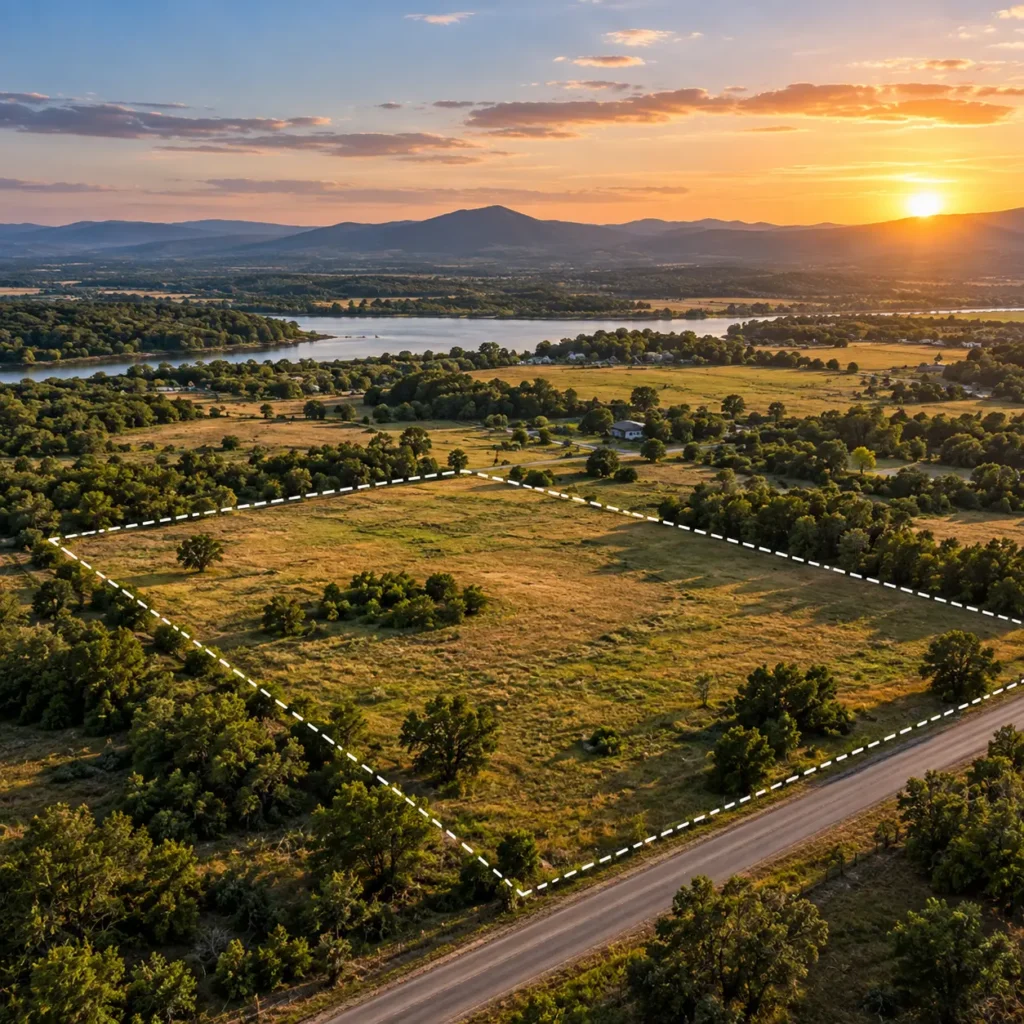
The legal description deserves singling out. Take it from the deed, not from the street address and not from the county parcel number. An address identifies a mailbox; a parcel number identifies a tax record. Neither reliably describes the boundaries you are buying, and on rural land they frequently disagree with each other.
Working through it in order keeps you from leaving holes:
- Choose a form that matches your state’s law. Several state Realtor associations publish a standard vacant land contract, and where one exists it is usually the safest starting point.
- Enter the full legal names of both parties and the legal description copied from the deed.
- State the purchase price, the earnest money amount, and how the balance will be paid.
- Add your contingencies with an explicit deadline on each one.
- Set the closing date, the title standard, the deed type, and who pays which closing costs.
- Have a real estate attorney review the draft, then both parties sign and date it.
If the deal is seller financed rather than a straight purchase, the document you need is a different one, and our guide on how to write a land contract covers the statutory clauses that instrument requires.
How Is It Different From a Land Contract or an Option?
Three documents get confused constantly, and using the wrong one is an expensive mistake. A purchase agreement buys now, a land contract finances over time, and an option buys the right to decide later.
| Purchase agreement | Land contract | Option to purchase | |
| What it does | Sets terms to buy and sell now | Finances the sale in installments | Grants a right to buy later |
| When title transfers | At closing | After the buyer pays in full | Only if the option is exercised |
| Payment | Cash or outside financing at closing | Monthly payments to the seller | Option fee now, price later |
| Best for | A standard cash or financed purchase | A buyer who cannot get a bank loan | A buyer who needs time to decide |
If you intend ownership to transfer at closing, you want a purchase agreement. A land contract leaves title with the seller for years, which is a fundamentally different risk position for the buyer.
Which Contingencies Actually Matter on Vacant Land?
Contingencies are conditions that must be satisfied before closing, and they are the buyer’s main protection. The standard list is not the right list for land.
The National Association of Realtors defines a contingency as “a condition that needs to be met before the purchase can be completed” and names ten common ones in its guide to contract contingencies: financing, appraisal, inspection, home sale, home close, title, homeowners insurance, HOA, early move-in, and property condition disclosure.
Read that list against a bare parcel. There is nothing to inspect, no home to close, no homeowners insurance to bind, usually no HOA, nothing to move into early, and in most states no property condition disclosure duty at all on vacant land, because those statutes key on a dwelling. Six of the ten do nothing for you.
What belongs there instead: legal recorded access, a clean survey with no encroachments, zoning and permitted use confirmed in writing by the county, a passing perc or soil test if you intend to build, utility availability and connection cost, flood status, and mineral rights if they matter in your state.
NAR also gives the rule that makes any of it work: “If one or more contingencies aren’t met within the time specified in the contract, the buyers or sellers can cancel the contract without penalty if the parties are acting in good faith.” Every contingency needs an explicit date. Our raw land due diligence checklist covers how to actually run each check inside the window you write.
How Do Earnest Money and Title Work?
Earnest money is the buyer’s good-faith deposit, and the only thing that reliably protects it is who holds it. Put it with a title company or a closing attorney in escrow, credited to the price at closing and released under terms the contract states.
There is no published dataset of earnest money amounts on vacant land, and anyone quoting a standard percentage is quoting nothing. What is worth negotiating is not the number but the release conditions: who instructs the escrow agent, on what evidence, and how long they have to act. A modest deposit under clear escrow terms is safer than a large one held by a seller you met online.
Title is the other half. A title company searches the record for liens, easements and gaps in the chain of ownership, and a policy covers what the search misses. The American Land Title Association states that title insurance has “protected the property rights of homebuyers for more than 125 years”, and that an owner’s policy, bought for “a one-time fee paid at closing”, is “the best way to protect your property rights, as well as your trustees, inheritors, and beneficiaries”.
Make clear, insurable title a condition of closing and name the escrow holder in the contract. Never wire a deposit directly to a private seller.
What Happens If a Buyer or Seller Defaults?
Default is a failure to do what the contract requires, and land carries a remedy most contracts do not. That is the most important thing on this page.
Cornell’s Legal Information Institute is direct about it. A breach of contract “occurs whenever a party who entered a contract fails to perform their promised obligations”, and “the default remedy available for a breach of contract is monetary damages”. Specific performance, under which “the breaching party must attempt to fulfill the terms of the contract as best as possible”, is “generally only awarded when dealing with one-of-a-kind assets like real estate”.
In plain terms: a seller who signs and then changes their mind may not be able to buy their way out. A court can order them to convey the parcel, because no amount of money buys an identical one. Every parcel is legally unique, and that is not a figure of speech.
The practical consequence runs both ways. It is the strongest argument for a buyer getting the agreement drafted properly, and the strongest reason for a seller to be certain before signing. Write the default clause out explicitly anyway: a contract silent on remedies leaves both sides arguing about what one paragraph should have settled.
Can You Include Seller Financing, and How Is It Taxed?
Yes, and the tax treatment changes when you do. A purchase agreement can provide for the seller to carry the balance, with the interest rate, payment schedule and default terms written in.
A seller who collects payments across more than one tax year is generally making an installment sale. IRS Publication 537 defines that as “a sale of property where you receive at least one payment after the tax year of the sale”, and sets the arithmetic: gross profit divided by contract price gives the gross profit percentage, which is then applied to each year’s payments less interest to produce that year’s taxable gain.
The buyer’s side matters too: property taxes, any interest deductibility, and whether the instrument is a purchase agreement with a note or a land contract that holds title back. None of this is tax advice, and a seller offering terms should run the numbers past a CPA before signing. Buyers looking specifically for these deals can see how they are structured in our guide to owner financed land.
What Mistakes Void a FSBO Land Purchase Agreement?
The expensive mistakes are structural, not stylistic.
Using an out-of-state or residential form. Land contract requirements vary by state, and a residential form carries contingencies that do not apply while omitting the ones that do.
Describing the parcel by address or parcel number. The legal description from the deed is the only reliable identifier of what is being conveyed.
Contingencies with no deadline. Without a date, a contingency is an argument rather than a right.
Paying a deposit outside escrow. Once the money is in a private seller’s account, getting it back is a lawsuit, not a process.
Signing before the diligence you could have done first. Anything you can verify before signing should be verified before signing, and our guide on what to look for when buying land covers the checks that change a price or kill a deal.
Do You Still Need a Closing After Signing?
Yes. Signing starts the deal; closing completes it. The gap between the two is where contingencies get satisfied, title work gets done, and the deed gets prepared and recorded.
Most land closings run through a title company or a closing attorney even with no agent involved, because someone has to hold the funds, clear the title exceptions and record the deed correctly. Build that timeline into the closing date you write rather than picking a date that sounds tidy. Our walkthrough of how to close on vacant land sets out the sequence and who does what.
Keep every document and confirmation until the deed is recorded and you have the recording information in hand. Recording is what puts your ownership on the public record ahead of anyone else’s claim.
Is a Written Land Purchase Agreement Worth It?
On every deal, without exception, because in most states an unwritten one is not a deal. The statute of frauds settles the question before anyone weighs convenience.
The remedy point is the one to remember. Land is legally unique, so a signed agreement on a parcel is unusually strong. That cuts for whichever side wants the deal to happen, which is exactly why it is worth getting right before either party signs.
Comparing live asking prices and terms is the fastest way to write realistic numbers into a draft, and the RawLand AI vacant land marketplace lists parcels directly from owners.
Start a free trial with RawLand AI
Frequently Asked Questions
Can I write my own land purchase agreement without a lawyer?
Yes. No law requires an agent or attorney to buy or sell land, and for-sale-by-owner deals are legal in every state. Because requirements vary by state and a missing essential term can leave the contract unenforceable, start from a state-specific form and have a real estate attorney review the draft before either party signs.
What makes a land purchase agreement legally binding?
It must be in writing and signed. Every state’s statute of frauds covers contracts for the sale or transfer of land, so a verbal agreement is generally unenforceable. The writing needs to identify both parties, describe the land by its legal description, state the price and terms, and carry both signatures.
Can a seller back out of a signed land purchase agreement?
Often not simply by paying damages. Cornell’s Legal Information Institute notes that monetary damages are the default remedy for breach, but specific performance is generally awarded for one-of-a-kind assets like real estate. A court can order a seller to convey the parcel, because no other parcel is identical. Consult an attorney on your facts.
What is the difference between a land purchase agreement and a land contract?
A purchase agreement is the contract to buy, with title transferring at closing and the price paid in cash or outside financing. A land contract is a seller-financed installment sale where the buyer pays over time and the seller keeps legal title until the balance clears. Different documents, different risk.
Resources and Further Reading
- Cornell Legal Information Institute, Statute of Frauds The rule requiring contracts for the sale or transfer of land to be in writing and signed.
- Cornell Legal Information Institute, Breach of Contract Why monetary damages are the default remedy and specific performance is reserved for unique assets like real estate.
- National Association of Realtors, Consumer Guide to Contract Contingencies The standard contingency list and the rule on deadlines and cancellation.
- American Land Title Association, How Title Insurance Protects You What an owner’s title insurance policy covers and what it costs.
- IRS Publication 537, Installment Sales How a seller-financed land sale is taxed across the years payments are received.