Key Takeaways
The seven decisions that turn a parcel nobody will finance into years of monthly income, with the federal reference points for each.
- Banks treat raw land as the riskiest real estate there is. The supervisory loan-to-value limit is 65%, against 85% for improved property.
- That 65% figure is why seller financing works on land. You are filling a gap the regulated market deliberately leaves open.
- Your rate has a legal floor and a legal ceiling: the IRS applicable federal rate below, your state’s usury cap above.
- Two instruments do the job, and a federal regulator has been looking closely at one of them since August 2024.
- With no dwelling on the land, the federal mortgage rules generally do not reach the deal. With a dwelling, two narrow seller-financer exclusions do the work.
- Decide your default process before you close, not when a payment stops arriving.
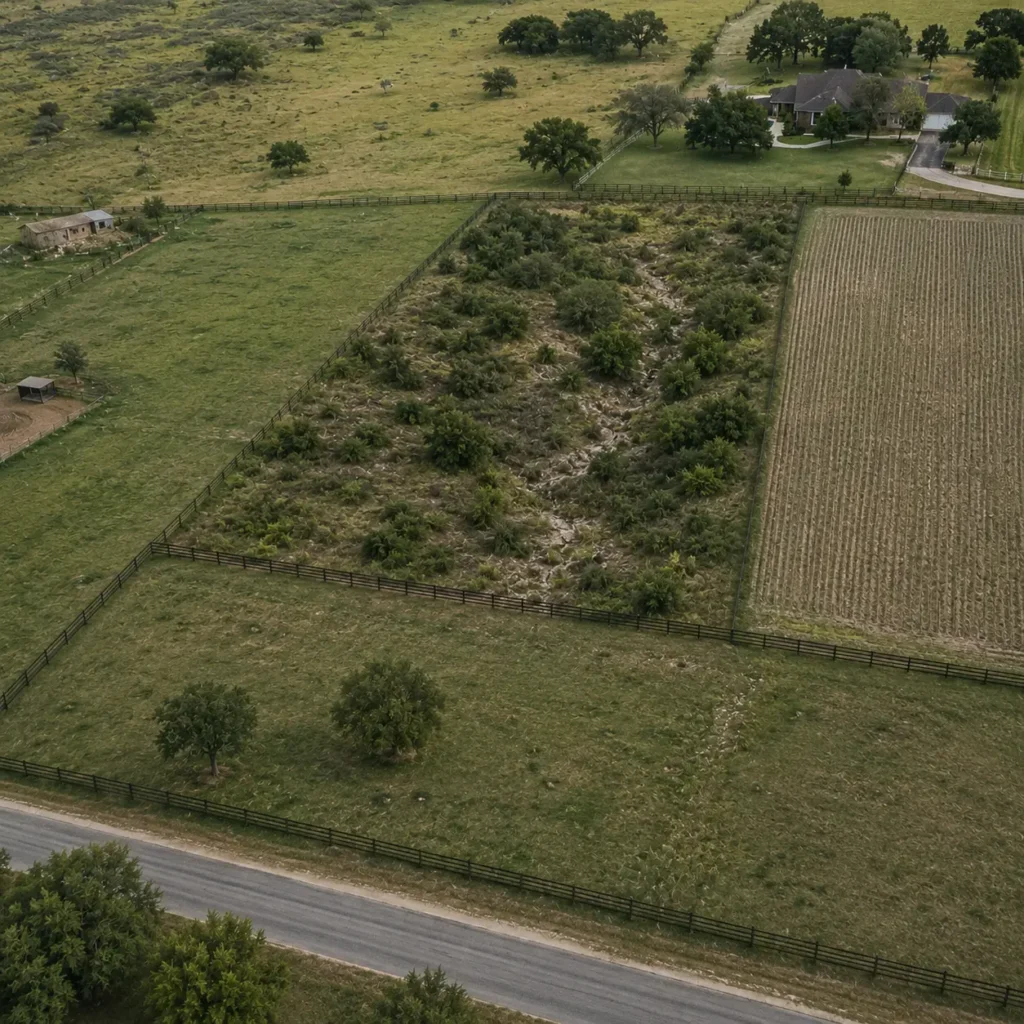
Banks do not like lending on bare land, and there is a published reason why. The federal interagency guidelines regulated lenders work to set a supervisory loan-to-value limit of 65% for raw land, against 85% for improved property. A bank following that benchmark wants 35% down on a parcel with nothing on it.
That gap is the entire opportunity. Buyers who want land and cannot get a loan for it are a large, permanently underserved group, and the only person positioned to serve them is the person who already owns the parcel. If you are still deciding whether this is for you, start with our guide to owner financing land.
Quick verdict: offer seller financing if you own the parcel free and clear, do not need the money in one lump, and are willing to screen a buyer and keep records for years. Skip it if you need cash now, could not absorb three missed payments, or do not want the administration. The upside is a wider buyer pool, a higher effective price and interest income. The cost is patience and default risk.
Should You Offer Seller Financing at All?
Only if you can genuinely wait for the money. Everything else is secondary to that.
The case for it is concrete. You reach buyers no bank will touch, you can hold a firmer price because the monthly payment is what the buyer is really evaluating, you earn interest for the length of the note, and the gain can usually be spread across years rather than landing in one.
The case against is equally concrete. You do not get paid up front, so this fails outright if the money is committed elsewhere. If the buyer stops paying you have to work through foreclosure or forfeiture, which takes time and costs money. You take on light bookkeeping for years, and you carry the risk that the buyer lets property taxes lapse.
If you are weighing that honestly and cannot decide, get in touch and we will work through your specific parcel and timeline with you.
Step 1: Set the Price and the Down Payment
The down payment is your entire safety margin, so set it before you set anything else.
Use the regulated benchmark as your reference point. The Interagency Guidelines for Real Estate Lending Policies set a supervisory loan-to-value limit of 65% for raw land and 75% for land development, against 85% for improved property. Translated into a down payment, a regulated lender working to that guideline wants 35% down on raw land.
You are not a bank and you are not bound by that. But it tells you where the professional risk assessment sits, and it means a seller asking 20% is already being considerably more permissive than the benchmark banks work to. Whatever you land on, the down payment does two jobs at once: it filters out buyers who are not serious, and it is what you keep if you ever have to take the parcel back.
On price, a modest premium over cash-sale value is normal, because you are providing something the buyer cannot get elsewhere. Set it against real comparable sales, not against what you hope the parcel is worth. The detail on structuring the deposit is in our guide to the land contract down payment.
Step 2: Set the Interest Rate and the Term
Your rate sits between a legal floor and a legal ceiling, and both are worth knowing before you pick a number.
The floor is the applicable federal rate. The IRS publishes it monthly. For September 2026 the annual AFR is 4.18% short-term, 4.49% mid-term and 5.12% long-term, published for purposes of section 1274(d). Price a note meaningfully below the relevant AFR and the IRS can recharacterise part of what you thought was principal as interest, which changes your tax position rather than the buyer’s.
The ceiling is your state’s usury limit, which varies widely and is the one thing on this page you should check locally before you sign anything.
Between those two, the reference point buyers will have in their heads is the ordinary mortgage market. Freddie Mac’s survey put the 30-year fixed average at 6.76% on 10 September 2026. A land note normally prices above that, because you are accepting risk a bank has declined at any price, and the size of the premium is a function of the down payment and the buyer.
Terms commonly run from a few years to fifteen, and some sellers add a balloon that makes the balance due after a set period. Our breakdown of owner financing interest rates goes through how the rate, the term and the down payment trade against each other.
Step 3: Choose Your Instrument
Two structures do this job, and the choice is about what happens if the buyer stops paying.
A promissory note secured by a deed of trust or mortgage. You deed the parcel to the buyer at closing, they sign a note, and your lien is recorded against the title. If they default you foreclose, much as a bank would. The buyer gets ownership immediately and you get a well-tested security position.
A contract for deed, also called a land contract or installment land contract. You keep legal title until the buyer finishes paying. It is often easier to unwind on default, but the rules vary sharply by state and several states give defaulting buyers substantial protections.
There is a live regulatory dimension here. On 13 August 2024 the CFPB issued an advisory opinion concluding that when a seller sells a home under a contract for deed, the transaction will generally meet TILA and Regulation Z’s definition of credit, and where it is secured by the buyer’s dwelling the buyer receives the protections attached to residential mortgage loans.
On bare land with no dwelling that opinion does not reach your deal. It is worth knowing anyway, because it tells you which instrument the federal regulator has been examining. Our comparison of land contract vs mortgage sets out how each behaves on default.
Step 4: Screen the Buyer
You are extending credit for years. Run the checks a lender would, scaled down.
Ask for the down payment in verified funds. Ask, with permission, for a credit or background check. Ask what they intend to do with the parcel and how they will pay for it. A serious buyer answers all three without friction.
The signals that should slow you down are a buyer who wants almost nothing down, cannot explain their income, or pushes you to skip documentation. You are under no obligation to finance anyone, and the down payment is doing most of the screening for you already, because people do not walk away easily from money they have already handed over.
Step 5: Draft, Sign and Record Everything
This is the step that converts an agreement into something enforceable.
You need the purchase agreement, the promissory note, and either the deed with a recorded deed of trust or mortgage, or the recorded contract for deed. Close through a title company or a real estate attorney, who will confirm clear title, handle recording and make sure your security interest is properly filed.
Recording is not administrative tidiness. An unrecorded interest can be worthless against a third party who records first.
Spell out the payment amount, the due date, the grace period, late fees, who pays property taxes and insurance, and exactly what constitutes default and what you may do about it. Do not assemble these from templates found online, because a drafting error here costs you either the property or the payments. Our guide to how to write a land contract covers what each document has to contain.
Step 6: Collect and Service the Payments
Decide up front how the money will actually arrive and be recorded.
Some sellers run it themselves with a spreadsheet and a payment app. Others use a licensed loan servicing company that collects, tracks the balance, issues statements and produces year-end tax forms for a fee. A servicer earns its keep if you are carrying several notes or want a neutral third party on the record.
Either way, apply every payment correctly between principal and interest, and confirm each year that property taxes are current, because a tax lien can jump ahead of your position. A seasoned note with a documented payment history is also worth considerably more if you ever sell it.
Step 7: Plan for Default Before It Happens
Write the default process into the documents while everyone is still friendly.
Define how many days late triggers default, the grace period, the late fee and your remedy. That remedy depends on your instrument and your state: foreclosure under a deed of trust or mortgage, forfeiture and cancellation under a contract for deed.
The structural comfort is that on default you generally keep the down payment and every payment made to date, and the land comes back to you to sell again. That is the second reason a healthy down payment matters.
Foreclosure and forfeiture follow strict state-specific procedures, and cutting corners creates liability. Have an attorney set out your state’s exact sequence before you close.
What Does a Real Deal Look Like?
An illustration rather than a recommendation. The arithmetic below is exact.
| Term | Example |
| Sale price | $40,000 |
| Down payment | 20%, $8,000 |
| Amount financed | $32,000 |
| Interest rate | 9% |
| Term | 10 years |
| Monthly payment | $405.36 |
| Total of payments | $48,643.50 |
| Total interest | $16,643.50 |
| All-in with the down payment | $56,643.50 |
You collect $8,000 at closing and $405.36 a month for a decade, on a parcel that might have sat unsold at $40,000 cash. The interest alone is $16,643.50, which is the part a cash sale never pays you.
Change any one input and the picture moves, so run your own numbers before you commit to terms.
How Is an Owner-Financed Land Sale Taxed?
Usually under the installment sale method, which spreads the gain rather than landing it in one year.
Under the IRS installment sale rules, a sale where you receive at least one payment after the tax year of the sale lets you report the gain portion of each payment as it arrives. You report on Form 6252 in the year of sale and in each year payments come in. Interest you collect is taxed separately as ordinary income.
Spreading the gain can keep you in a lower bracket and defers the tax, which is one of the quieter advantages of carrying a note. None of this is tax advice, and depreciation recapture and investment-property treatment can both change the picture, so run your specific numbers past a CPA before you sign rather than after.
Do Dodd-Frank and the SAFE Act Apply to Vacant Land?
Generally not, when there is no dwelling on the parcel, and the regulation says so plainly.
Regulation Z section 1026.36 applies its loan originator and related requirements to “closed-end consumer credit transactions secured by a dwelling”. Bare land with no home on it is outside that scope, which is a large part of why seller financing is ordinary practice on vacant parcels and unusual on houses.
Where a dwelling is involved, the regulation contains two express exclusions for seller financers rather than a flat prohibition. Section 1026.36(a)(4) covers a person financing the sale of three or fewer properties in any 12-month period. Section 1026.36(a)(5) covers a natural person, estate or trust financing only one property in any 12-month period. Both require the property to secure the financing and neither is available to someone acting as a builder in the ordinary course of business.
The practical boundary is therefore the dwelling, not the land. If your buyer intends to put a home on the parcel, or if there is already one on it, the analysis changes and it is worth a conversation with a local real estate attorney. State law governs land contracts, usury, foreclosure and disclosure in every case, and it varies more than the federal position does.
What Do Sellers Get Wrong Most Often?
Three things, in order of how much they cost.
Taking too little down. It is the single decision that determines how a default plays out, and the regulated benchmark for raw land is 65% LTV for a reason.
Using documents off the internet. Generic paperwork routinely misses state-specific requirements and is least useful exactly when you need it most.
Skipping the screening. Financing someone you never checked turns an income plan into a problem you own for years.
The avoidable ones behind those: forgetting to record the security instrument, never confirming property taxes are current, pricing the note below the AFR, and having no written default process. When your terms are set, sell your land with the financing terms stated in the listing, which is what pulls in the buyers looking specifically for them.
Put Your Terms in Front of Financing-Ready Buyers
Sellers who treat this like a lending decision do well. A real down payment, documents drafted properly, a buyer you actually checked, and records you keep from day one.
Ready to list with financing terms? Create a free account and put your parcel in front of buyers searching for exactly those terms.
Frequently Asked Questions
How much down payment should I require on owner-financed land?
There is no fixed answer, but there is a federal reference point. The interagency supervisory loan-to-value limit for raw land is 65%, meaning a regulated lender would want 35% down. Sellers commonly ask less, and the down payment is both your screening tool and what you keep on default, so set it deliberately rather than to close a deal.
What interest rate can I charge when I finance land myself?
Between two limits. The floor is the IRS applicable federal rate, 5.12% long-term in September 2026, below which part of your principal can be recharacterised as interest. The ceiling is your state’s usury cap. Buyers compare against ordinary mortgage rates, 6.76% on the 30-year in September 2026, and land notes normally price above that.
What happens if the buyer stops paying?
It depends on your instrument. Under a deed of trust or mortgage you foreclose; under a contract for deed you pursue forfeiture and cancellation. In most cases you keep the down payment and all payments made, and the land returns to you to sell again. The legal steps are strict and vary by state, so have an attorney map your process before closing.
Is seller financing on vacant land legal without a license?
Generally yes. Regulation Z applies its loan originator requirements to closed-end consumer credit secured by a dwelling, and bare land with no home falls outside that. Where a dwelling is involved, narrow exclusions exist for sellers financing one property, or three or fewer, in a 12-month period. State law still applies, so confirm locally.
Can I sell the note later if I need cash?
Yes. A performing note is an asset you can sell to a note buyer for a lump sum, normally at a discount to the remaining balance. What you get depends heavily on documentation quality and the length of the buyer’s on-time payment history. Keeping clean records from the first payment directly raises what the note is worth.
Resources and Further Reading
- CFPB Regulation Z, section 1026.36 sets the dwelling-secured scope of the loan originator rules and the two seller-financer exclusions.
- CFPB Advisory Opinion: Consumer Protections for Home Sales Financed Under Contracts for Deed is the 13 August 2024 opinion on contracts for deed secured by a dwelling.
- Interagency Guidelines for Real Estate Lending Policies, 12 CFR Part 365 contains the supervisory loan-to-value limits, including 65% for raw land.
- IRS Revenue Ruling 2026-17 publishes the September 2026 applicable federal rates under section 1274(d).
- IRS Publication 537: Installment Sales explains reporting gain as payments are received rather than in the year of sale.
- Freddie Mac Primary Mortgage Market Survey publishes the weekly 30-year and 15-year fixed mortgage averages.