Key Takeaways
Nine strategies that cut your time to close on rural land, without handing most of your equity to a wholesaler.
- Accurate pricing is the single biggest speed lever, because overpricing is the most common reason rural land sits.
- Owner financing reaches buyers that cash-only sellers cannot, since banks rarely lend against raw land.
- A land-specific platform puts your parcel in front of people filtering for acreage, not people scrolling houses.
- Disclosing access, flood and zoning upfront stops deals dying three weeks into due diligence.
- Instant cash offers close fastest and cost the most, and there is a federal case that puts a number on it.
Search how to sell land fast and almost everything on page one is a company that wants to buy it from you cheaply. Of the top sixteen results for that phrase, one is an article. The rest are cash buyers, and every one of them profits from you choosing the quick route.
This guide takes the other path. Nine things you control that shorten time to close while keeping your price, in the order you should do them. The first three set price and terms, the next four get the parcel in front of real buyers, and the last two close the gap. The full process of selling without an agent is covered in our guide to selling vacant land without a realtor; this page is about speed specifically.
Quick verdict: the fastest honest way to sell land is to price it right, make it easy to buy with owner financing, put it where land buyers actually look, and remove every reason a deal could stall. A cash buyer closes faster and pays materially less. If you have a few weeks rather than a few days, these nine strategies usually produce real offers in that time at close to full value.
What Actually Makes Land Sell Fast?
Four things working together: the right price, the right buyers, easy terms, and no surprises. Every delay traces back to one of them.
Overpricing stalls more land sales than anything else. The wrong platform hides the listing from people who would buy it. Cash-only terms shrink the pool in exactly the market where financing is hardest to get. And an undisclosed problem does not stay hidden, it surfaces in due diligence and either kills the deal or reopens the price.
Each of the nine strategies below targets one of those four. They compound, so doing three of them well beats doing all nine halfway.
The Nine Strategies
1. Price it right from day one
Nothing moves land faster than the correct price, and nothing wastes time like the wrong one. A fresh listing gets its most attention in the first two weeks, and an overpriced parcel spends that window being scrolled past.
Price from recent comparable land sales of similar parcels on a per-acre basis, and aim at or slightly under market if speed is the priority.
“Slightly under” is worth defining, because most sellers either ignore it or overdo it. In practice it means landing a few percent below where the comparable sales cluster, close enough that a buyer running their own numbers sees a fair deal rather than a distressed one. Cut too deep and you invite lowball offers from people who assume something is wrong with the parcel.
Starting at a dream number and cutting later is the expensive version of the same idea. The listing burns its best two weeks at the wrong price, and by the time it reaches the right one the buyers who were watching have already moved on.
2. Use a valuation to price with confidence, not a guess
Testing the market for three months is the slow way to find your price. Data gets you there before you list.
A land-trained valuation model pulls comparable sales and weighs access, zoning, utilities and terrain to produce a range in seconds. RawLand AI’s tool reads 40+ data points and returns an estimate in about 60 seconds, which is enough to set an asking price with a reason behind it rather than a hope.
3. Offer owner financing
This is the highest-impact move available on rural land, and the reason is structural rather than promotional. Banks rarely write loans against raw land with no improvements, so a large share of interested buyers cannot get financing at all. A seller who offers terms is competing for buyers that cash-only sellers never reach.
You also earn interest on top of the price, and the tax spreads out. Under the IRS installment sale rules, a sale where you receive at least one payment after the tax year of sale lets you report part of the gain as each payment arrives, rather than all of it in year one. You can elect out if you would rather report the whole gain immediately, and the agreement needs adequate stated interest or the IRS may impute it.
Get the contract drafted or reviewed by a real estate attorney in the parcel’s state. Our guide to owner financing on land covers the structures and the risks on both sides. None of this is tax or legal advice.
4. Write a listing that sells
A listing that reads like a tax record gets ignored. This is the cheapest speed gain on the list, because it costs nothing but attention.
Lead with the strongest feature, describe what it is like to stand on the land, name the specific use, whether that is hunting, homesteading or building, and include the terms buyers type. Our guide to writing a land listing covers the structure.
5. List where land buyers actually search
Reach without relevance is wasted. Rural land on a house portal sits under thousands of homes; on a land platform it sits in front of people filtering by acreage, state, price and financing.
A land marketplace trades raw audience size for intent, and intent is what converts. For the full comparison of listing routes and what each costs, see our breakdown of how to sell land online.
6. Disclose access, flood and zoning upfront
Hidden problems surface in due diligence, which is the worst possible moment. Disclosing early costs you nothing and protects your timeline.
Confirm legal access in writing, check the parcel on the FEMA Flood Map Service Center, and verify current zoning with the county. Put all three in the listing. Transparent listings attract buyers who are serious, survive due diligence, and close without a late renegotiation.
7. Add real photos and a boundary map
Buyers cannot walk the land before they inquire, so the images do that job. Weak visuals are a silent conversion killer on rural parcels.
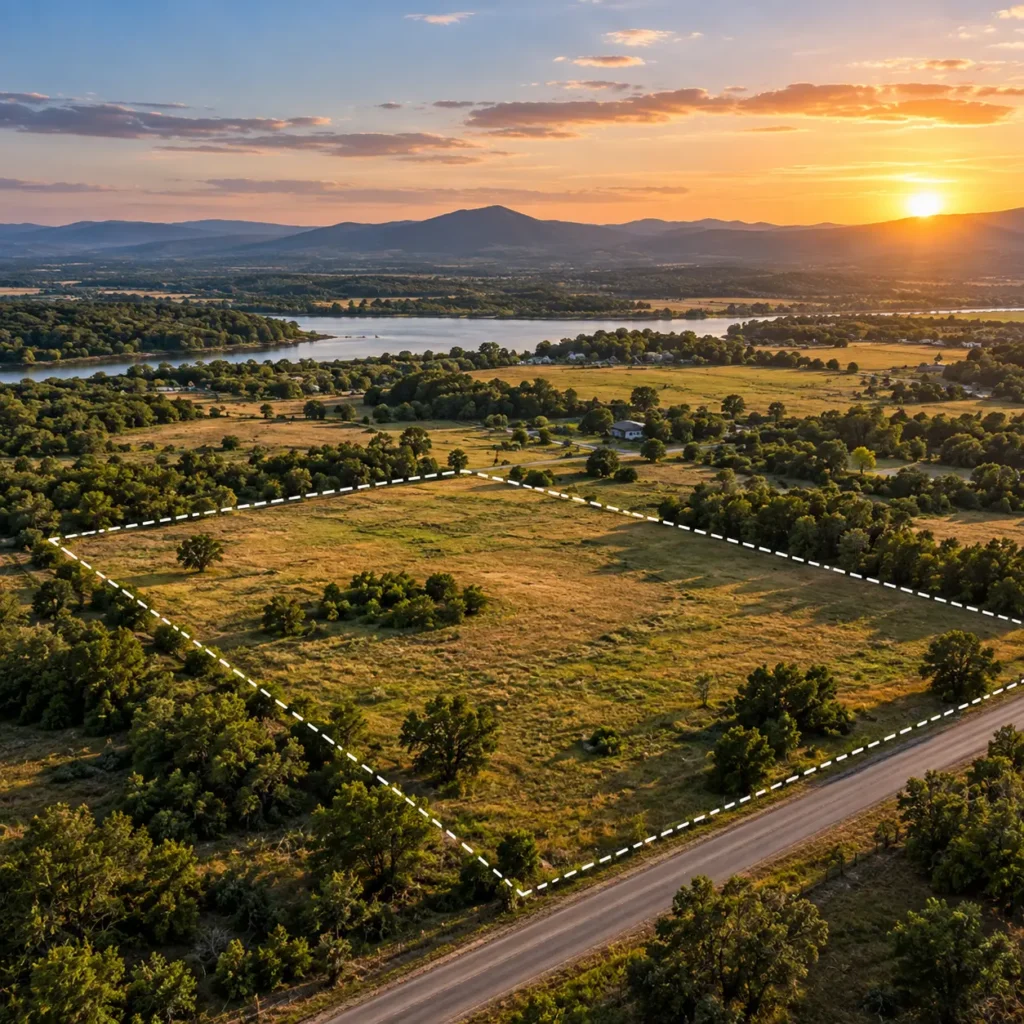
Include ground-level photos in decent light, a simple boundary map, and a drone shot if you can get one. Show the road frontage, the terrain and any water.
Photograph the things a buyer would otherwise have to ask about: where the access comes in, what the corners look like, how much of the acreage is open versus wooded. Two blurry photos taken through a car window will cost you more inquiries than almost anything else on this list.
8. Answer inquiries the same day
Buyers contact several sellers at once and the first useful reply usually wins. On rural land, where serious buyers are fewer, losing one to a slow response can cost weeks.
Have the parcel details, the survey and the tax figures ready before you list, so a reply takes minutes rather than an evening of digging.
9. Take the listing to where your buyer already is
Land buyers cluster by use. Hunters, homesteaders, off-grid buyers and farmland investors each gather in their own groups and forums, and a few targeted posts can surface a buyer the marketplace has not reached yet.
It is also a low bar to clear. NAR reported that 40% of for-sale-by-owner sellers did not actively market their property at all. That is home data rather than land data, and NAR does not publish a land equivalent, but the direction is worth knowing: most by-owner sellers post a listing and wait. Doing anything beyond that puts you ahead of a large share of your competition.
How Long Does Land Take to Sell?
An accurately priced, well-marketed rural parcel typically draws its first serious inquiry within one to two weeks and closes inside one to three months. Those are working expectations rather than guarantees, and they assume the parcel has legal access and a defensible price.
Remote, landlocked or overpriced land takes longer on any platform, and no amount of marketing fixes a price problem. Our breakdown of how long vacant land takes to sell goes into what moves the timeline.
Why Is Your Land Not Selling?
If a parcel has been listed for months with no serious interest, the cause is almost always one of six things, and all six are yours to fix.
- Overpriced. The most common cause by a wide margin.
- Cash only. Shuts out the buyers who cannot get a bank loan on raw land.
- A lifeless listing. Specifications with no story.
- Poor or missing photos. Buyers will not inquire on land they cannot picture.
- An undisclosed flaw that keeps killing deals in due diligence.
- Slow replies. Every day of delay is a buyer talking to someone else.
Fix the price first. If the price is right and the parcel still sits, work down the list in order.
Should You Just Take a Cash Offer?
Sometimes, and the honest answer depends on whether days or dollars matter more to you.
Companies that buy land for cash can close in days with no financing contingency. That genuinely suits an owner facing foreclosure, an estate that needs settling quickly, or a parcel someone simply wants gone. It is a legitimate trade: you are paying for speed and certainty.
What it costs is worth seeing with real evidence rather than a guess. In 2022 the FTC took action against Opendoor over its instant-offer marketing, finding that the company’s “offers were lower than a home’s market value” and that “most people who sold their homes to Opendoor typically lost thousands of dollars compared to what they would have made if they’d sold their homes on the open market.” The company agreed to pay $62 million in refunds.
That is house data, and Opendoor is not a land buyer. The economics are the same in either asset, because the business model is the same: buy below market, resell above it. The margin has to come from the price, and the price is yours.
So get at least three offers, check each one against a valuation before you respond, and only then decide what the speed is worth. If you have a few weeks rather than a few days, the nine strategies above usually get you close to the same timeline at close to full value.
Start With the Price, Then Work Down the List
Every strategy here depends on the first one. A parcel priced correctly with a plain listing still sells; a parcel priced wrong with perfect photos does not. Get the number right, then fix terms, then fix reach.
When the price and the listing are ready, list your land and let the other eight work.
Ready to set your number? Start your free trial and run a valuation before you decide what fast is worth.
Frequently Asked Questions
What is the fastest way to sell land?
Price at or slightly below market, offer owner financing, list on a land-specific platform, disclose access and flood status upfront, and reply to every inquiry the same day. A cash-buyer company closes faster still, but at a discount to market value, so most sellers do better using these strategies at close to full price.
Why is my land not selling?
Almost always price, followed by cash-only terms, a weak listing, poor photos, an undisclosed problem, or slow replies. Rural land also has a smaller buyer pool, so reaching the right people matters more than raw exposure. Fix the price first, then add owner financing, then check the listing is on a land platform.
Does owner financing help sell land faster?
Usually, and the reason is structural. Banks rarely lend against raw land with no improvements, so many interested buyers cannot get financing at all. Offering terms reaches buyers a cash-only seller never sees, and you earn interest on top. Have an attorney in the parcel’s state draft or review the contract.
How fast can I sell vacant land?
With accurate pricing and decent marketing, expect a first serious inquiry within one to two weeks and a close in one to three months. A cash buyer can close in days at a discount. Overpriced, landlocked or very remote parcels take longer on any platform, so price and legal access set your real timeline.
Should I sell my land for cash or list it?
List it if you have a few weeks and want full value. Take a cash offer if you must close in days and accept a below-market price, for instance in a foreclosure or a fast estate settlement. Either way, get a valuation and at least three offers before you agree to anything.
Resources and Further Reading
- National Association of Realtors: FSBOs Reach All-Time Low reports that 40% of for-sale-by-owner sellers did not actively market their homes.
- FTC Consumer Alert: Opendoor’s false claims sets out the agency’s findings on instant cash offers and the $62 million settlement.
- IRS Publication 537: Installment Sales explains reporting gain as payments are received, electing out, and stated interest requirements.
- FEMA Flood Map Service Center lets you confirm and disclose a parcel’s flood zone before listing.